Fin’Amor

The Art of Refined Love

to Mi Reina

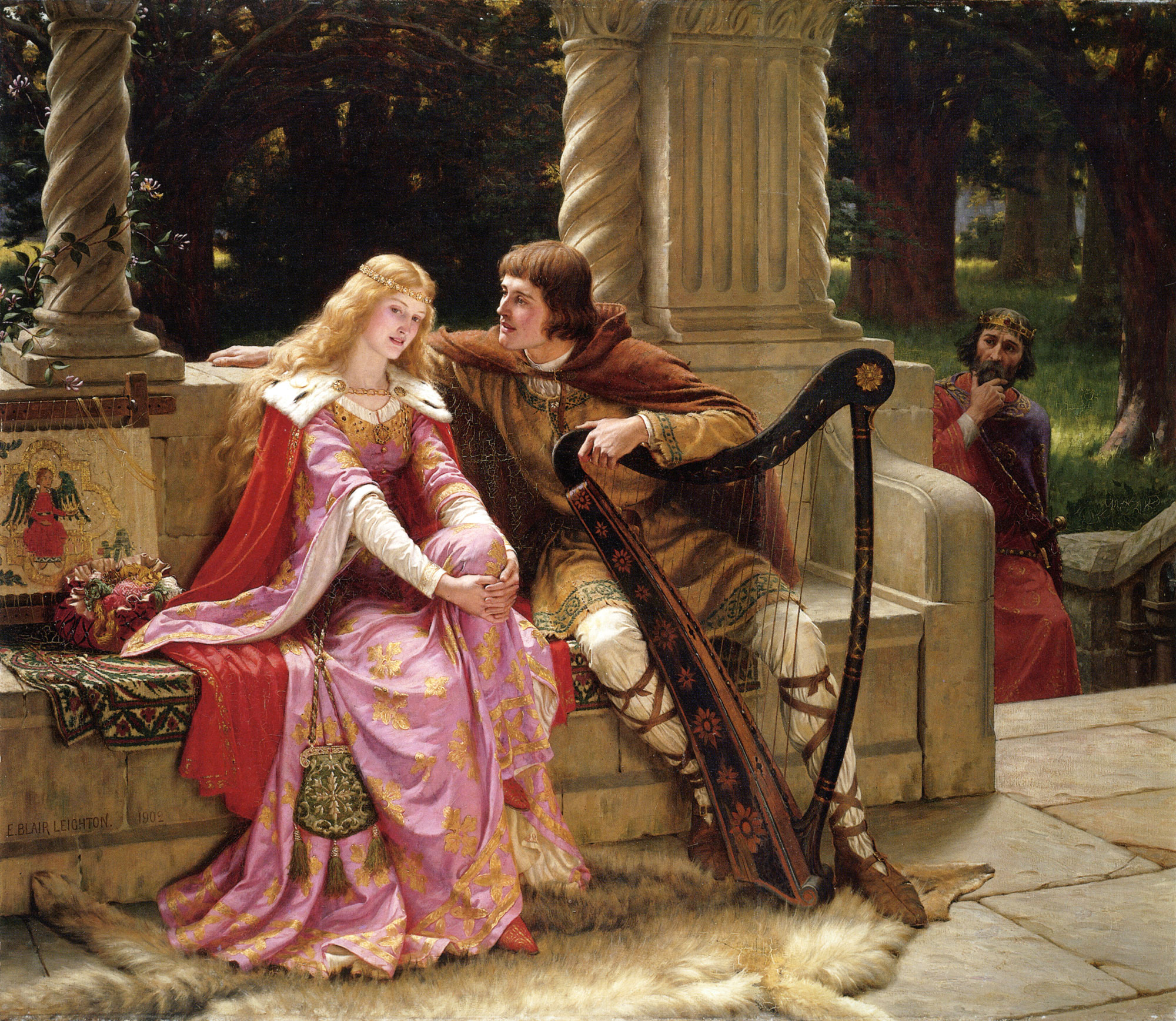
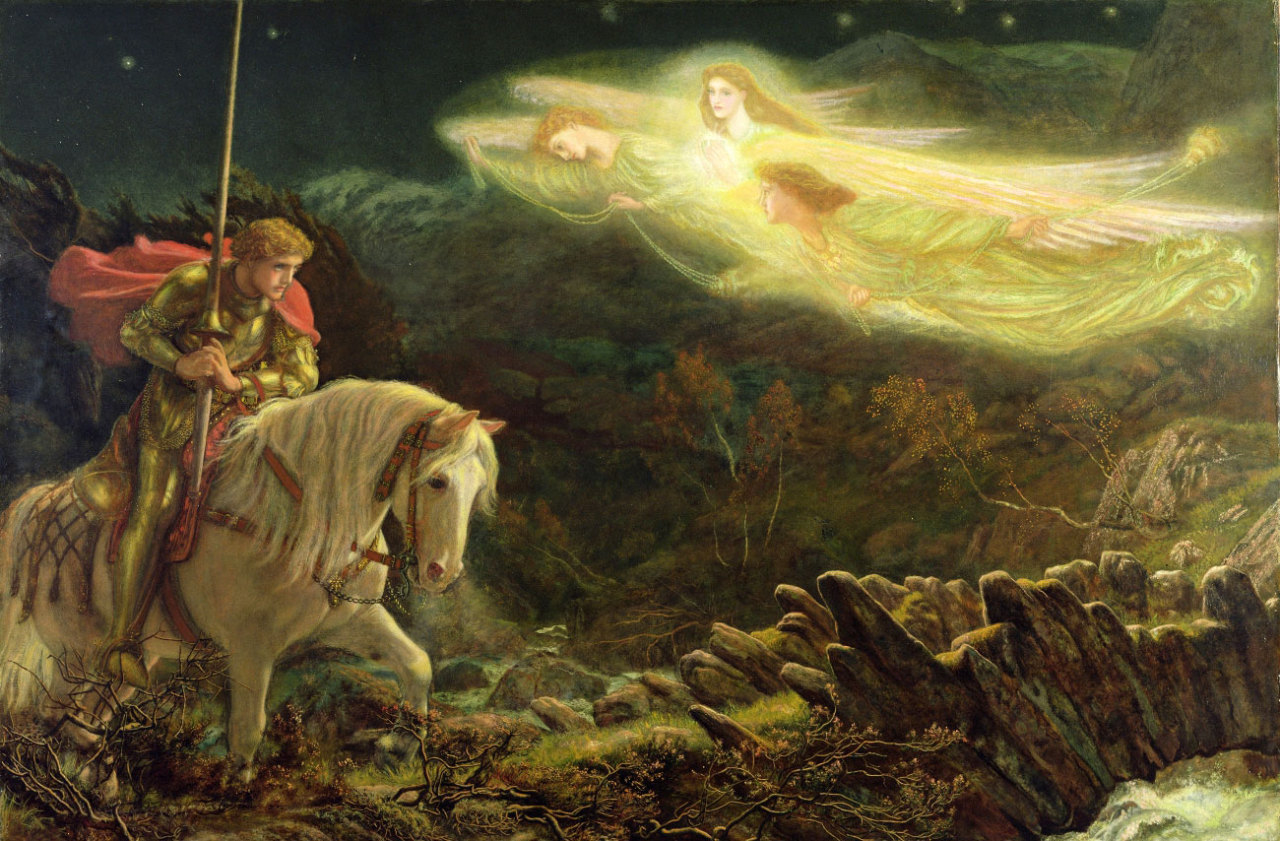
Born among the troubadours of late-11th-century Occitania — the art of love as a noble discipline.

Enter the Court
⥥
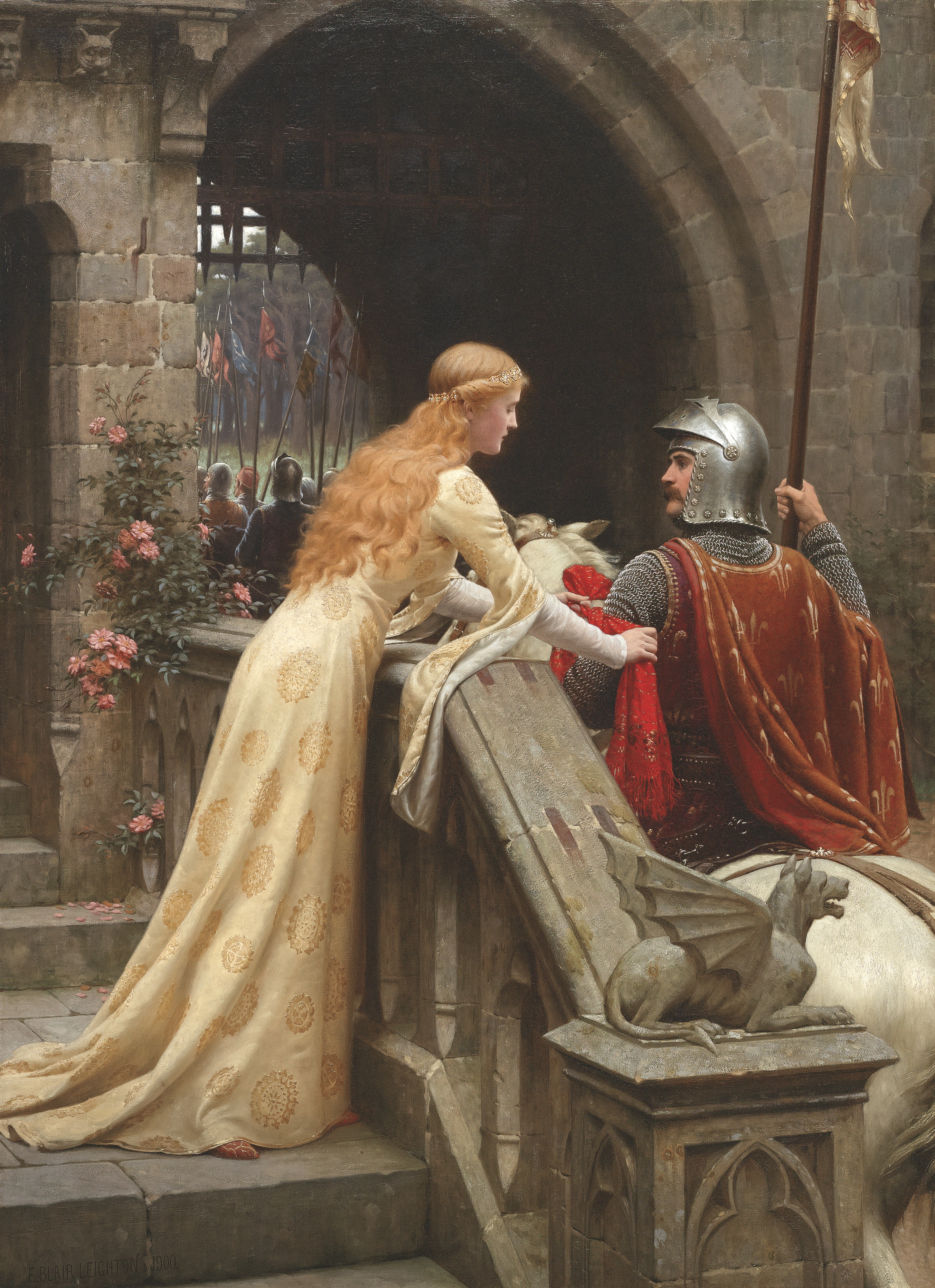
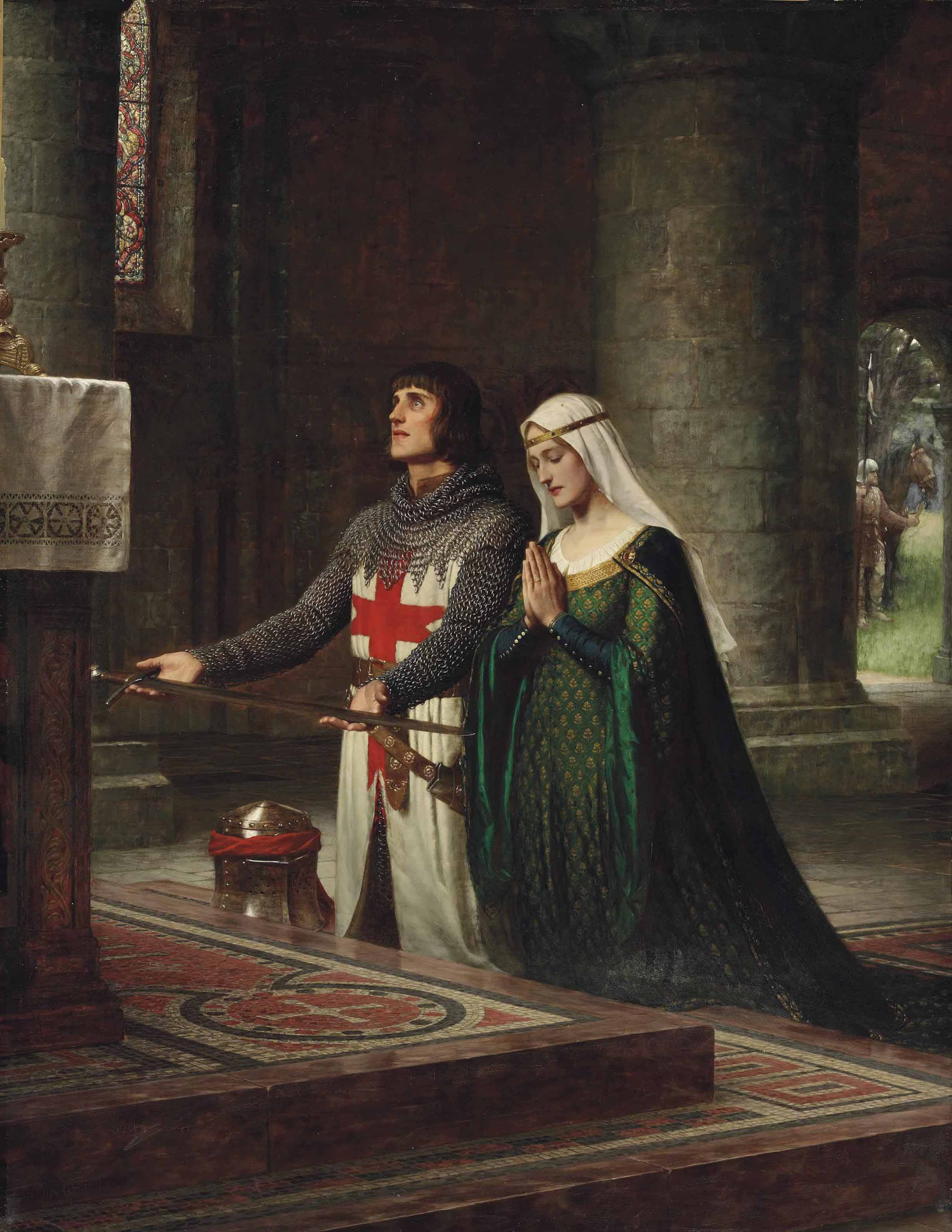
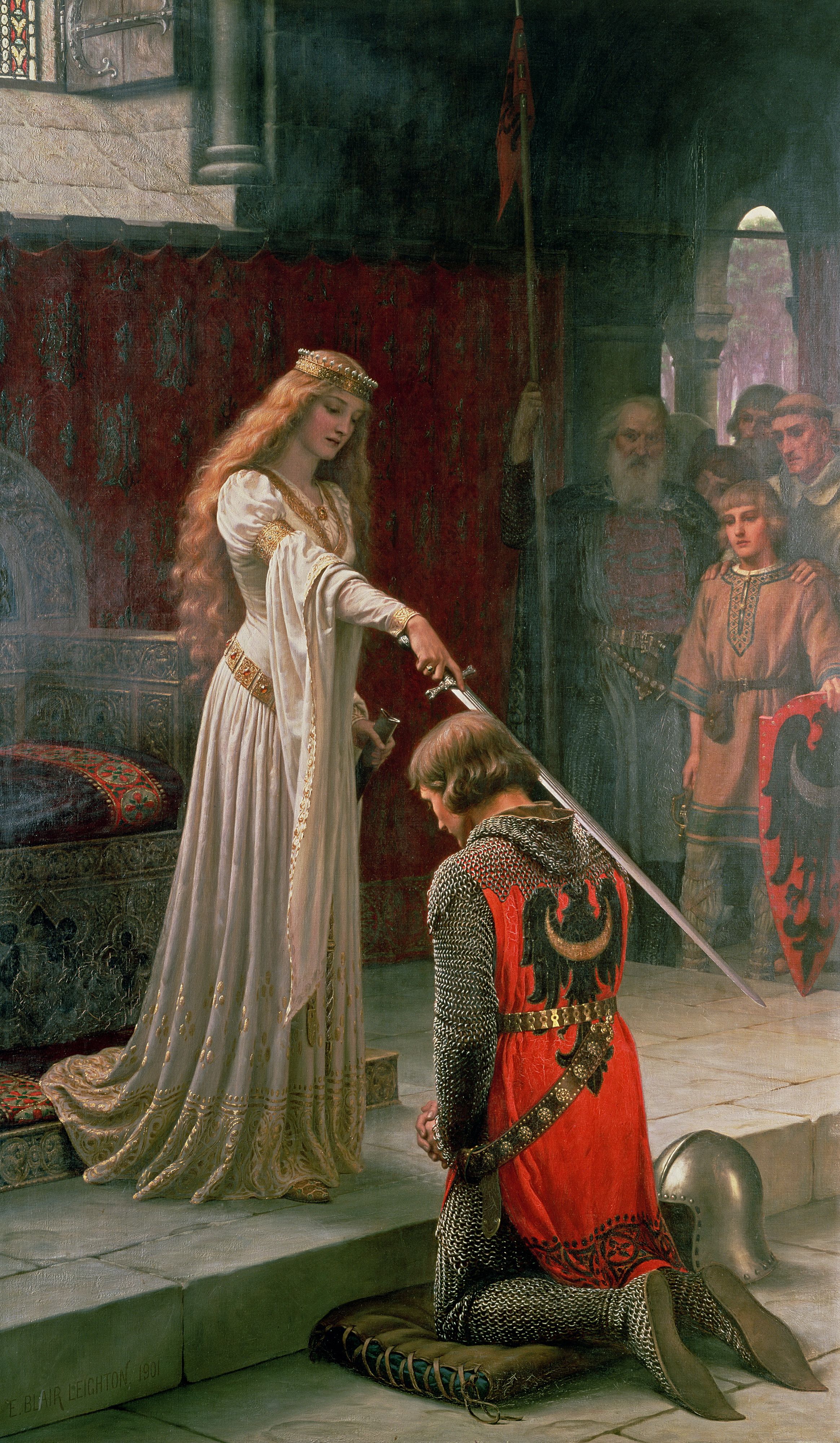
Edmund Blair Leighton, The Accolade (1901): a queen in a white gown dubs a kneeling armoured knight on the shoulder with a sword.
Edmund Blair Leighton, The Accolade (1901)

The Tradition

The Tradition of Fin’Amor

in'amor — Occitan for 'refined love' — was the art of loving as a noble discipline, sung by the troubadours of medieval southern France. The lover served his lady as a vassal serves his lord, and prized devotion above all reward.

It is love made into a craft: patient, courteous, and ennobling. The pages that follow trace where it came from, the rules its poets set down, and the words they loved by.

A Short History

Origins, Flowering & Decline

Where it began

in'amor (Occitan for ‘fine’ or ‘refined love’) emerged in the late 11th century, around 1100, at the ducal court of Aquitaine in southern France. Its first known practitioner is William IX, Duke of Aquitaine (in Occitan Guilhem de Peitieus, 1071–1126), the earliest troubadour whose poetry survives. The familiar labels ‘courtly love’ and amour courtois are not medieval at all: they were coined by the French philologist Gaston Paris in 1883; the poets themselves called it fin'amor.

How it flourished

Through the 12th century the ideal spread across Occitania and into the courts of northern France and England, carried in large part by two powerful patrons: Eleanor of Aquitaine (c.1124–1204), William IX's granddaughter, and her daughter Marie, Countess of Champagne (1145–1198). Around 1185–1190 Andreas Capellanus wrote De Amore, which codified the conventions into numbered ‘rules of love.’

Why it arose

Why fin'amor arose is genuinely debated, and no single theory has won out. The most cited reading is the feudal-homage model: the poet casts himself as a vassal serving his lady (domna, or midons, literally ‘my lord’), borrowing the language of feudal loyalty for love. A second explanation is social: a leisured court audience, with noblewomen present as patrons and arbiters, created both the demand for such poetry and the fiction of the unattainable, often married, beloved. Others point to possible Hispano-Arabic influence reaching southern France from Al-Andalus, and to parallels with the rising 12th-century cult of the Virgin Mary. Scholars even dispute whether courtly love was a lived social practice or merely a literary convention — so these should be read as competing hypotheses, not settled fact.

And its decline

In the south the tradition declined after the Albigensian Crusade (1209–1229) — launched against the Cathars of the region — shattered the independent Occitan courts that had sustained it, scattering the patrons and poets who kept it alive. What the troubadours called fin'amor did not vanish so much as migrate: its conventions passed north and east into other literatures, from the trouvères of northern France to Dante and the Italian dolce stil novo. But the particular world that produced it — the leisured Occitan court, with its noblewomen as patrons and arbiters — did not survive the shock, and the name ‘courtly love’ would not be coined until 1883, centuries after those courts had fallen quiet.

“Fair love, so it is with us: neither you without me, nor I without you.”

Marie de France, Chevrefoil (The Honeysuckle), Old French, c.1170

The Code

The Rules of Love

Andreas Capellanus set down thirty-one regulae amoris in De Amore (c.1185–1190) — part counsel, part gentle satire. A few are illuminated below; all thirty-one follow.

Rule 2. He who is not jealous cannot love.

Rule 8. No one should be deprived of love without the very best of reasons.

Rule 14. The easy attainment of love makes it of little value; difficulty of attainment makes it prized.

Rule 16. When a lover suddenly catches sight of his beloved his heart palpitates.

Rule 24. Every act of a lover ends in the thought of his beloved.

Rule 30. A true lover is constantly and without intermission possessed by the thought of his beloved.

The Thirty-One Rules of Love

— De Amore, as rendered by Andreas Capellanus, c.1185–1190

Regulae Amoris

The thirty-one rules of love — De Amore, Book Two.

  1. Marriage is no real excuse for not loving.
  2. He who is not jealous cannot love.
  3. No one can be bound by a double love.
  4. It is well known that love is always increasing or decreasing.
  5. That which a lover takes against the will of his beloved has no relish.
  6. Boys do not love until they arrive at the age of maturity.
  7. When one lover dies, a widowhood of two years is required of the survivor.
  8. No one should be deprived of love without the very best of reasons.
  9. No one can love unless he is impelled by the persuasion of love.
  10. Love is always a stranger in the home of avarice.
  11. It is not proper to love any woman whom one would be ashamed to seek to marry.
  12. A true lover does not desire to embrace in love anyone except his beloved.
  13. When made public love rarely endures.
  14. The easy attainment of love makes it of little value; difficulty of attainment makes it prized.
  15. Every lover regularly turns pale in the presence of his beloved.
  16. When a lover suddenly catches sight of his beloved his heart palpitates.
  17. A new love puts to flight an old one.
  18. Good character alone makes any man worthy of love.
  19. If love diminishes, it quickly fails and rarely revives.
  20. A man in love is always apprehensive.
  21. Real jealousy always increases the feeling of love.
  22. Jealousy, and therefore love, are increased when one suspects his beloved.
  23. He whom the thought of love vexes eats and sleeps very little.
  24. Every act of a lover ends in the thought of his beloved.
  25. A true lover considers nothing good except what he thinks will please his beloved.
  26. Love can deny nothing to love.
  27. A lover can never have enough of the solaces of his beloved.
  28. A slight presumption causes a lover to suspect his beloved.
  29. A man who is vexed by too much passion usually does not love.
  30. A true lover is constantly and without intermission possessed by the thought of his beloved.
  31. Nothing forbids one woman being loved by two men or one man by two women.

— De Amore, Book II. The work is often read as gentle satire as much as earnest counsel.

A Gathering of Flowers

A Florilegium

A florilegium (Latin, ‘a gathering of flowers’) is a medieval anthology of the finest short passages copied from larger works. Here is a small posy — each line real, sourced, and attributed to the troubadours and the heirs who carried fin’amor onward.

Ab la dolchor del temps novel / foillo li bosc, e li aucel / chanton chascus en lor lati / segon lo vers del novel chan

“With the sweetness of the new season the woods leaf out, and the birds sing, each in its own tongue, to the measure of the new song.”

Guilhem de Peitieus (William IX of Aquitaine), Ab la dolchor del temps novel · Occitan · c.1100

The earliest troubadour whose verse survives — the first voice of fin'amor.

Lanquan li jorn son lonc en may / m'es belhs dous chans d'auzelhs de lonh, / e quan mi suy partitz de lay / remembra·m d'un'amor de lonh.

“When the days grow long in May, the sweet song of birds from afar is pleasing to me; and when I have departed from there, I remember a love far away.”

Jaufre Rudel, Lanquan li jorn son lonc en may · Occitan · c.1147

The classic statement of amor de lonh — 'love from afar.'

Ben es mortz qui d'amor non sen / al cor calque dousa sabor; / e que val viure ses amor?

“I truly hold him to be dead who does not feel in his heart some sweet taste of love; and what is life worth without love?”

Bernart de Ventadorn, Non es meravelha s'eu chan · Occitan · c.1170

One of Bernart's best-known cansos.

Ai las! tan cuidava saber / d'amor, e tan petit en sai! / car eu d'amar no·m posc tener / celeis don ja pro non aurai.

“Alas, how much I thought I knew of love, and how little I know! For I cannot keep myself from loving her from whom I shall gain nothing.”

Bernart de Ventadorn, Can vei la lauzeta mover (the skylark song) · Occitan · c.1170

From perhaps the single most famous troubadour lyric.

Ieu sui Arnautz qu'amas l'aura / e chatz la lebre ab lo bou / e nadi contra suberna.

“I am Arnaut, who gathers the wind, and hunts the hare with the ox, and swims against the rising tide.”

Arnaut Daniel, En cest sonet coind'e leri · Occitan · c.1180

His signature tornada; Dante called him il miglior fabbro — 'the better craftsman.'

A chantar m'er de so qu'eu no volria, / tant me rancur de lui cui sui amia, / car eu l'am mais que nuilla ren que sia.

“I must sing of that which I would rather not, so bitter do I feel toward him whose beloved I am; for I love him more than anything in the world.”

Comtessa de Dia, A chantar m'er de so qu'eu no volria · Occitan · c.1175

The only canso by a trobairitz (woman troubadour) to survive with its melody.

Bele amie, si est de nus: / Ne vus sanz mei, ne jeo sanz vus.

“Fair love, so it is with us: neither you without me, nor I without you.”

Marie de France, Chevrefoil (The Honeysuckle) · Old French · c.1170

Tristan and Iseut as hazel and honeysuckle, so entwined that parting kills both.

Amor, ch'al cor gentil ratto s'apprende … / Amor, ch'a nullo amato amar perdona, / mi prese del costui piacer sì forte, / che, come vedi, ancor non m'abbandona.

“Love, which quickly seizes hold of a gentle heart … Love, which absolves no beloved from loving in return, seized me so strongly with delight in him that, as you see, it still does not leave me.”

Dante (voicing Francesca da Rimini), Inferno, Canto V · Italian · c.1308–1320

The dolce stil novo creed: love and the noble heart are one thing.

Tanto gentile e tanto onesta pare / la donna mia quand'ella altrui saluta, / ch'ogne lingua devèn tremando muta, / e li occhi no l'ardiscon di guardare.

“So noble and so virtuous my lady appears when she greets others, that every tongue, trembling, grows silent, and eyes do not dare to gaze upon her.”

Dante Alighieri, La Vita Nuova (sonnet for Beatrice) · Italian · c.1294

Dante's most famous sonnet in praise of Beatrice.
Where & When

A Thread Through Time

  1. c. 1071

    William IX, Duke of Aquitaine (Guilhem de Peitieus) is born — the earliest troubadour whose poetry survives.

  2. c. 1100

    The first troubadour songs: fin'amor emerges at the ducal court of Aquitaine in southern France.

  3. 12th century

    The ideal flourishes across Occitania, northern France and England, carried by patrons Eleanor of Aquitaine and her daughter Marie, Countess of Champagne.

  4. c. 1185–1190

    Andreas Capellanus writes De Amore, codifying the conventions into numbered “rules of love.”

  5. 1209–1229

    The Albigensian Crusade shatters the Occitan courts; in the south the tradition declines.

  6. 1883

    French philologist Gaston Paris coins “courtly love” (amour courtois) — a modern label; the poets themselves called it fin'amor.

ATLANTIC MEDITERRANEAN SEA N Poitiers Bordeaux Ventadorn Toulouse Narbonne Le Puy Orange Troyes 0 100 200 km the art travels north, 12th c. Paris the troubadour south WHERE IN FRANCE

Fin'amor arose in the courts of Aquitaine around 1100 and flowered across Occitania — before Eleanor's daughter Marie carried it north to Champagne.

  • Poitiers (Poitiers, Vienne) — court of William IX, the first troubadour.
  • Ventadorn (Corrèze) — home of Bernart de Ventadorn, master troubadour.
  • Narbonne (Aude) — Viscountess Ermengarde patronised troubadours.
  • Troyes (Champagne, north) — Marie & Chrétien carry it north.

Those Who Made It

The Cast

The poets and patrons behind fin'amor — the dukes and queens who kept the courts, and the troubadours (women among them) who made the songs.

William IX of Aquitaine

1071–1126 · Duke & earliest troubadour

Duke of Aquitaine and Count of Poitiers, known in Occitan as Guilhem de Peitieus. He is the earliest troubadour whose work survives — eleven poems are preserved under his name — and so stands at the head of the lyric tradition. A powerful feudal prince, he was grandfather of Eleanor of Aquitaine.

Eleanor of Aquitaine

c.1122–1204 · Patron & queen

Granddaughter of William IX, she was successively Queen of France (wife of Louis VII) and Queen of England (wife of Henry II), and mother of Marie de Champagne and of kings Richard I and John. Her court was a hub of aristocratic culture, and she stands as the central noblewoman of the age the troubadour tradition addressed.The extent of her direct, personal literary patronage is debated by modern scholars.

Marie de Champagne

1145–1198 · Patron & countess

Countess of Champagne and daughter of Eleanor of Aquitaine and Louis VII of France. She commissioned Chrétien de Troyes' romance Lancelot, or The Knight of the Cart — Chrétien names her as his patron in its prologue and credits her with its matière and sen (its subject and treatment). Her court at Troyes was a leading literary center of northern France.

Chrétien de Troyes

fl. c.1160–1191 · Romance poet

The foremost poet of Old French Arthurian romance, active in the orbit of the court of Champagne. His verse romances — Erec and Enide, Cligès, Yvain, Lancelot, and the unfinished Perceval — fixed many conventions of courtly love in narrative form. His Lancelot is the work Gaston Paris analysed in 1883 when he coined the term amour courtois.

Andreas Capellanus

fl. late 12th c. · Author of De Amore

Author of the Latin treatise De amore (On Love), written c.1185, which codifies the conduct of love in dialogues and a famous set of rules. The name means "Andrew the Chaplain," a description of his clerical office rather than a family name, and little else about the man is recorded. The treatise is associated in its text with the court of Marie de Champagne.

Bernart de Ventadorn

fl. c.1147–1170 · Troubadour

One of the most celebrated troubadours and a master of the trobar leu (the "light," clear style), with around forty-five surviving poems — a large body for the period. His songs on love, including the famous lark lyric "Can vei la lauzeta mover," were widely imitated. His medieval vida links him to the courts of Ventadorn and of Eleanor of Aquitaine, though that life mixes record with legend.

Comtessa de Dia (Beatritz de Dia) New

fl. late 12th / early 13th c. · Trobairitz

The best-known of the trobairitz (women troubadours). Four of her cansos survive, and one — "A chantar m'er de so qu'eu no volria" — is the only song by a trobairitz to survive with its melody intact. Her lyrics voice female desire directly and are a touchstone of the women's side of the tradition.Her identity is uncertain: her brief vida names her only "comtessa de Dia" (calling her the wife of Guillem de Peitieus); the given name "Beatritz" is a later scholarly conjecture, not recorded in the vida.

Jaufre Rudel New

fl. mid-12th c. · Troubadour

A troubadour, styled "prince of Blaye," famous for the theme of amor de lonh — "love from afar," devotion to a distant, unseen lady. About six or seven of his poems survive. The legend that he loved and died for the Countess of Tripoli, sight unseen, grew up around him in his vida and later inspired many writers.

Marcabru New

fl. c.1130–1150 · Early troubadour

One of the earliest troubadours and among the first named poets of the trobar clus, the "closed" or difficult style. Over forty of his poems survive. Sharp-tongued and moralizing, he satirized false and purely sensual love and set it against a purer ideal — a counter-voice at the very formation of the tradition.

Arnaut Daniel New

fl. c.1180–1200 · Troubadour

A Gascon troubadour and supreme craftsman of the trobar ric, the "rich," intricately worked style. He is credited with inventing the sestina verse form. Dante placed him in the Purgatorio and had him speak in Occitan, calling him "il miglior fabbro" (the better craftsman), and Petrarch likewise praised him.

Raimbaut d'Aurenga New

c.1147–1173 · Troubadour & lord

Lord of Orange and Aumelas and a leading troubadour of the generation around 1170, with some forty poems surviving. A virtuoso experimenter across the plain (leu) and difficult (clus) styles, he exchanged verse with Giraut de Bornelh debating the two manners, and the medieval tradition links him with the Comtessa de Dia.

Words of the Troubadours

The Lover's Lexicon

Three words the troubadours would have known — the art, the secret, and the song.

fin'amor
refined, ennobling love — the troubadours' own name for the art (Occitan).
senhal
the secret code-name a troubadour gave his lady, to praise her in song without naming her. e.g. “Mi Reina” — my queen.
canso
the troubadour's love song, the central form of the tradition.

Ab la dolchor del temps novel / foillo li bosc, e li aucel / chanton chascus en lor lati / segon lo vers del novel chan

“With the sweetness of the new season the woods leaf out, and the birds sing, each in its own tongue, to the measure of the new song.”

— Guilhem de Peitieus (William IX of Aquitaine), c.1100

To Read Further

A Reading List

A short shelf — the source in translation, the poetry itself, and two guides to the debate. (Scholars still dispute whether courtly love was lived practice or literary convention.)

  1. The Art of Courtly Love (De Amore)

    Andreas Capellanus; trans. John Jay Parry · 1941

    Primary source (translation)

    Late-12th-century Latin treatise (c. 1184-1186) codifying and in part satirizing fin'amor; Parry's Columbia UP version is the classic English translation, though P. G. Walsh's 1982 Latin-English edition is now preferred for scholarship. Note that fin'amor originates in the troubadour lyric, not in this treatise.

  2. Lyrics of the Troubadours and Trouveres: An Anthology and a History

    ed. and trans. Frederick Goldin · 1973

    Anthology (troubadour poetry, parallel text)

    Parallel-text anthology giving the Old Occitan (troubadour) and Old French (trouvere) originals with facing English; the go-to classroom collection of the poetry that embodies courtly love.

  3. Troubadour Poems from the South of France

    trans. William D. Paden and Frances Freeman Paden · 2007

    Anthology (troubadour poetry, translation)

    A readable modern English selection (D.S. Brewer) spanning the troubadour tradition; good complement to Goldin.

  4. The Allegory of Love: A Study in Medieval Tradition

    C. S. Lewis · 1936

    Scholarly study

    Clarendon Press study that fixed 'courtly love' in the modern critical vocabulary; influential but now heavily contested (notably by D. W. Robertson Jr. and others).

  5. The Origin and Meaning of Courtly Love: A Critical Study of European Scholarship

    Roger Boase · 1977

    Scholarly survey (historiography)

    Manchester UP survey mapping the competing theories of courtly love's origins; the best single guide to the debate itself.

Curator's Colophon

This little manuscript was made for love of the subject — to keep, in one quiet place, the old idea that devotion is a discipline worth practising, and that to love well is itself a fine art.

Dedicated, as every canso must be, to its senhal: Mi Reina.

Writ & illuminated · Anno MMXXVI